


£9.50
The Core Quadrant: Using the Body as a Compass
Turn insight into experience — with your body as your guide
Familiar with Ofman’s Core Quadrant? This e-book takes it a step further. Move beyond theory by combining the model with physical awareness — so qualities, pitfalls, and patterns become tangible and coachable.
Walk the quadrant. Recognize stress signals. Shift behavior.
A hands-on guide for coaches who want to deepen transformation — not just talk about it.
For those who coach from presence, not just process.
Description :
You know Daniel Ofman’s core quadrant. The insight a completed quadrant gives is often clear. What succeeds less often is that your coachee also notices it at the moment they fall into their pitfall.
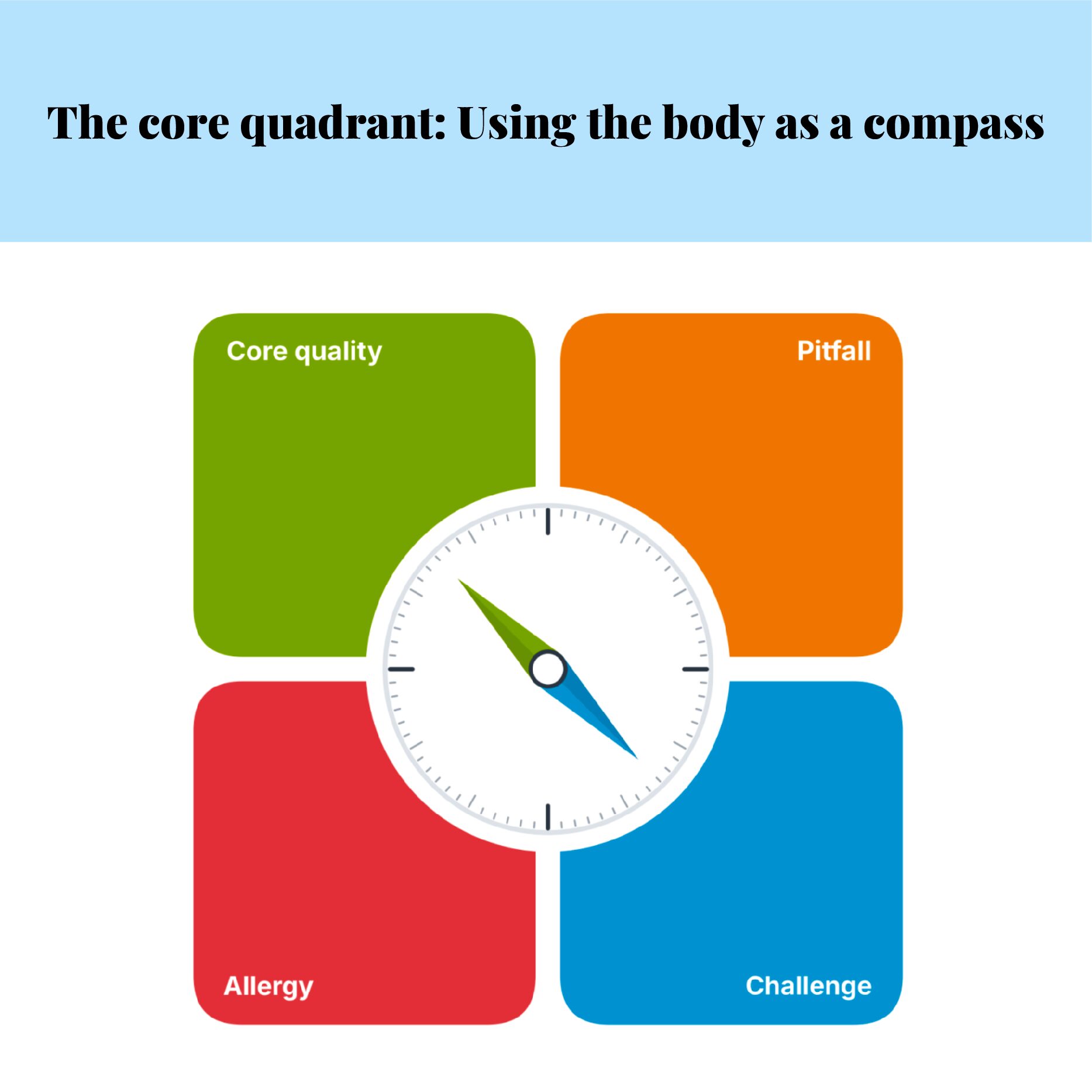
In this 31-page e-book, you use the body as a compass. Tension and breathing show sooner than thoughts do that someone is slipping into their pitfall, and they point the way to the challenge. You work with exercises and forms, and you literally walk the quadrant.
The e-book begins with the four corners of the quadrant and the four angles for filling one in, with an extensive list of example quadrants. Next come twelve check questions for testing a quadrant, the reasons why the challenge is so hard to develop, and an exploration of admiration with a double quadrant. The second half is about stress and the body as a compass, closing with walking the quadrant. At the back you will find a blank core quadrant form and a blank Stress Sources Form.
For coaches, trainers, team facilitators and HR professionals who already know the core quadrant and want to take it further. It is meant for anyone who wants to work more with the body without heavy somatic methods, and who is looking for practical exercises on themes such as stress, perfectionism, setting boundaries and collaboration.
Claire Campioni: Physiotherapist with more than 30 years of experience, specialised in neurophysiology, personal development and stress management.
The e-book briefly explains the four corners and the angles, but it is written for readers who know the model and want to go deeper.
It works with body signals and breathing, and does not use heavy somatic methods.
Turn insight into experience. With this e-book, you let your coachee feel where the challenge begins.
Also take a look at Neuroplasticity Explained to Coaches, about how patterns build up in the brain and why small, repeated shifts make the difference.

