Much of the behaviour explored in sessions — procrastination, compliance, control, avoidance — turns out not to be a pattern, but a response. A reaction to what hasn’t been felt. Because what isn’t felt, can’t be integrated. And what isn’t integrated, keeps repeating.
That’s why coaching through emotion isn’t therapeutic detour. It’s a strategic entry point. Emotion as signal, not as problem.
A session deepens the moment emotions are allowed to surface. Not as an end in themselves, but as access to unmet needs, desires or boundaries.
Fear rarely needs to be “fixed”, it’s often pointing to a need for clarity or security. Anger demands recognition, not suppression. Sadness reveals loss or disconnection. And joy? It nearly always signals a longing to be seen or to share meaning.
To learn how to feel is to learn how to choose. Not in spite of emotion, but through it.
Try beginning a session without an agenda. No goals, no defined coaching questions. Just one invitation: What do you feel right now?
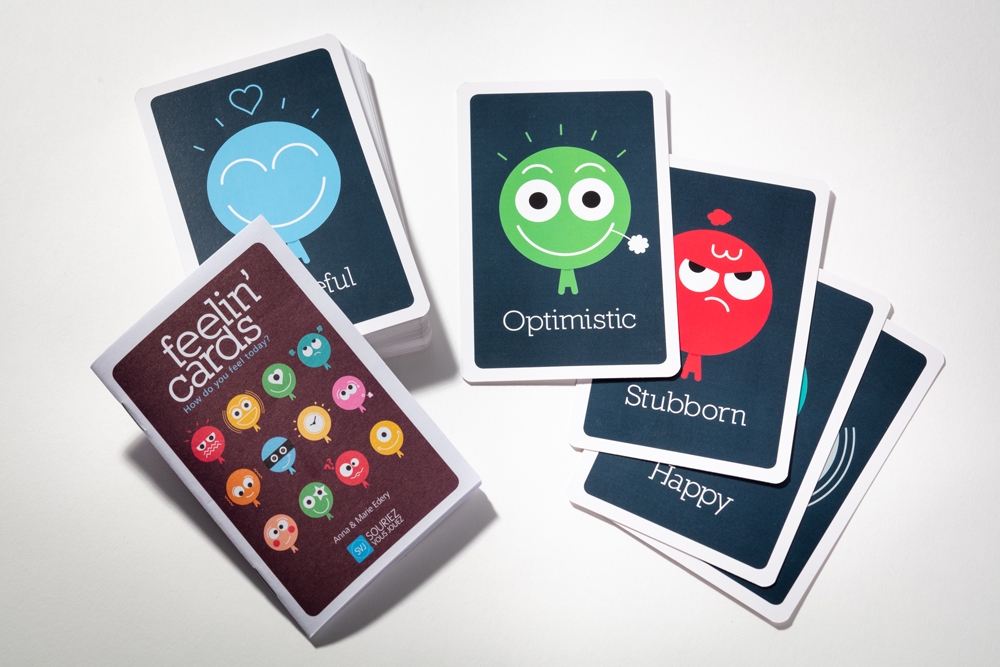
When language falls short, let your client select a visual. This slows cognition and activates embodied awareness. The Feelin’ Cards offer a clear structure for this: a set of visual, emotionally resonant images that help clients articulate what they feel, without overanalyzing it.
What do you feel?
Where do you feel it?
What happens when you stay with it?
Three deceptively simple questions that open the space for transformation.
What is felt regularly, and acknowledged without judgment, literally rewires the brain. Coaching through emotion isn’t just deep work, it’s neuroplastic work.
The Understanding Our Emotions Workshop Kit, part of the My Coaching Toolkit series, is grounded in this principle. It offers emotional models, reflective frameworks, and group-ready exercises that bring emotion into the coaching process, not as side-topic, but as core material.
This isn’t a tool for “managing feelings,” but for recognising emotion as a feedback mechanism, and working with it consciously.
Many coaches are comfortable allowing emotion, but hesitate to lead with it. They ask, “How does that feel?” but don’t direct the process.
But emotion requires leadership: a coach who names what is avoided, holds space without rescuing, and confronts gently but clearly.
Not to “help” the client, but to deepen the process.
Not to be empathic, but to be strategically attuned.
And not as a therapist, but as a guide towards autonomy.
If your clients don’t just want support but true change, emotion is your most direct ally. Not as a one-time intervention, but as a foundation for insight and agency.
The Feelin’ Cards help your clients name what’s alive beneath the surface.
The Understanding Our Emotions Workshop Kit provides the framework to integrate emotional awareness into your coaching, with structure and depth.
Both tools are designed for coaches who lead with clarity, not just compassion.
Explore here Understanding Our Emotions Workshop and here The Feelin’ Cards. Deepen your practice with the one thing that always tells the truth: what is truly felt.
We constantly add content to the site, so please check our on-line shop and look at the full range of games, ebooks and kits. Or read some of the other blog posts written by our team of international coaches.
Please note – Please include a reference and link back to this original blog if you wish to copy or share anything we have written: (cc) MyCoachingToolkit.com – 2023