

£16.50
This kit has been designed specifically for coaching young people in order to:
After payment, your download link for the ZIP file will be available on your order confirmation page.
Description :
Sometimes a young person does not say very much. Answers stay short, hesitation takes over, or the real issue remains just out of reach. Not because nothing is there, but because talking about feelings, choices, relationships, or pressure can feel too direct or too big.
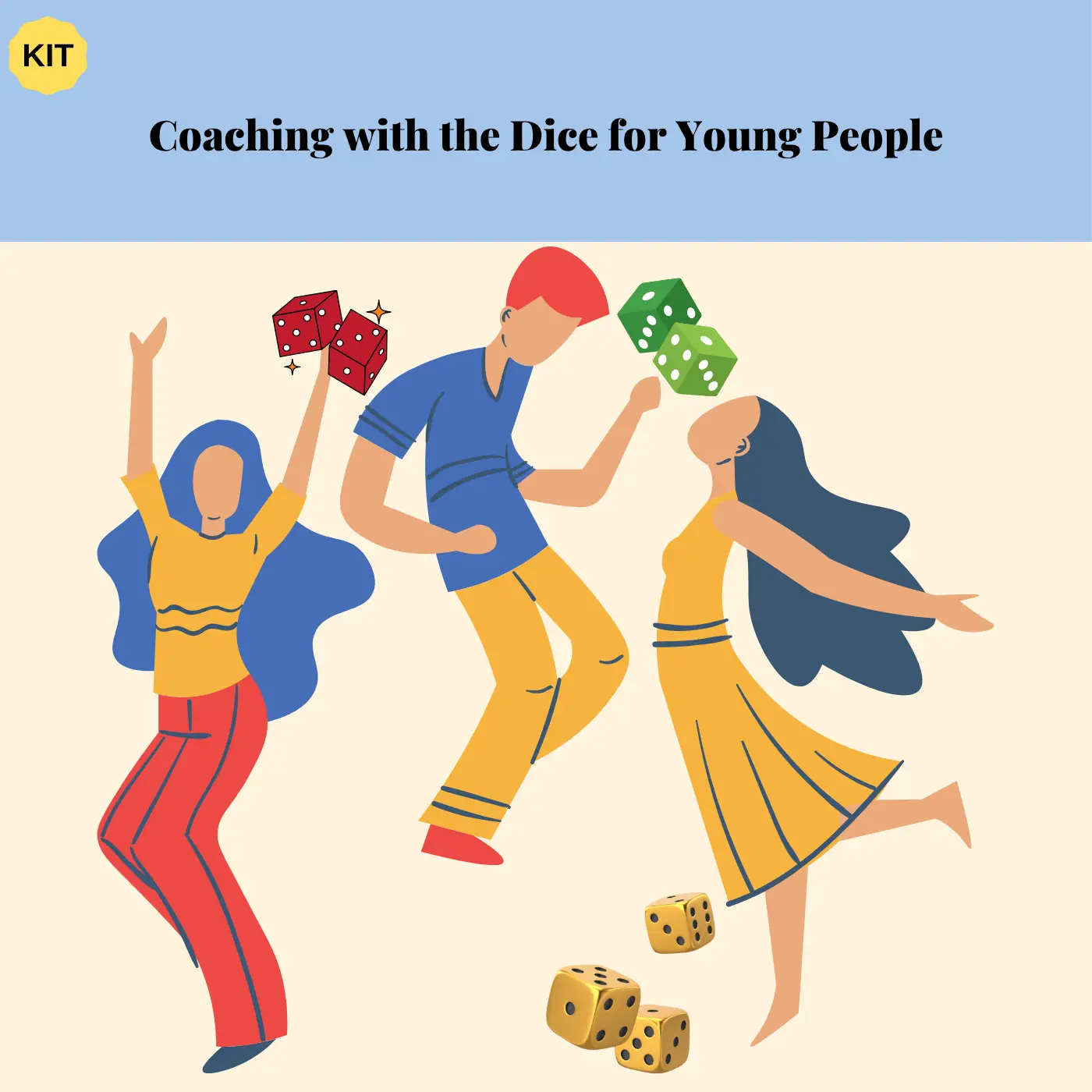
Coaching with the Dice for Young People is a coaching exercise that helps open conversations in a light and accessible way. The dice gives structure to the conversation, while the questions offer direction. The exercise creates an opening, after which you as a coach can use your own skills to deepen the conversation, reflect, and guide it further.
This ready-to-use tool has been designed specifically for coaching young people. It combines a simple dice ritual with 12 themed question cards, helping young people speak, reflect, and explore what is going on in a way that feels lighter and less pressured.
The playful format lowers the threshold. The questions help create focus. Together, they make it easier to begin.
This exercise can help you:
Young people do not always find it easy to talk spontaneously about what they feel or what they are struggling with. A direct question can sometimes feel too heavy, too personal, or simply too early.
That is where this exercise helps. The dice does not do the coaching for you. It simply opens the conversation in a different way. It gets something moving. From there, you as a coach can listen, reflect, ask follow-up questions, and help the young person go further.
Download:
The 12 included themes
A young coachee rolls the dice and lands on a question about perfectionism. The question opens the subject in a lighter way than a direct confrontation might. From there, the coach listens, reflects, and explores what is underneath. The value of the exercise is not only in the question itself, but in what it makes possible afterwards.
This is a reflection tool, not a diagnostic one. You do not need to use every question. Choose what fits the moment. If one question does not connect, you can easily move to another one or switch theme.
A conversation does not need to be deep or complete right away. Sometimes it simply needs a beginning. This exercise offers exactly that: a light but meaningful entry point. From there, the coach can take over with their own skills and guide the conversation further.